
Waterproof Dog Collars: Why Hardware Matters
Table of Contents
- Waterproof Strap and Corrosion-Resistant Hardware Are Different Things
- What Is Underneath the Hardware’s Finish?
- Stainless Steel and Solid Brass: What to Expect
- D-Ring Construction Matters Alongside the Material
- Why Rivets Deserve a Closer Look
- Cost and Availability Involve Real Tradeoffs
- Compare Hardware by Material, Construction and Care
- Check the Dog Tag or Nameplate, Too
- Care for the Complete Waterproof Collar
- Questions to Ask Before Buying
- Waterproof Collar Hardware FAQs
A waterproof dog collar needs more than a strap that sheds water. The buckle, D-ring, rivets and identification plate also affect how the complete collar handles wet conditions over time.
That does not mean every collar needs the same hardware. Materials, construction, price, availability and intended use all involve tradeoffs. Understanding those differences helps you choose a collar that suits your dog and know how to care for it.
At dogIDs, we work with these components every day. We often joke that if you want to put a product through a durability test, put it on a dog for a week. It is a joke, but dogs do have a way of showing you where the practical challenges are.
Waterproof Strap and Corrosion-Resistant Hardware Are Different Things
A coated strap can resist water absorption while the metal components behave differently. When comparing waterproof dog collars, check the specifications for the complete collar rather than relying on its appearance or the word “waterproof” alone.
BioThane® is one example of coated webbing used in waterproof collars. Its coated surface makes everyday mud and water easier to clean away. Hardware still needs appropriate care, especially after exposure to saltwater, pool water or trapped grit.
For a firsthand look at everyday use, read our story about Ace and the benefits of a waterproof dog collar.
What Is Underneath the Hardware’s Finish?
Silver-colored hardware is not necessarily stainless steel, and gold-colored hardware is not necessarily solid brass. A finish describes the surface. The underlying metal is a separate part of the specification.
Nickel-Plated Steel
Nickel-plated steel has a steel base with a nickel surface finish. It can provide a silver appearance at a lower cost than stainless steel, and it is a common option available through hardware suppliers.
If the finish wears or is damaged, exposed steel can rust. How quickly that happens depends on the component, plating quality, wear, environment and care. There is no single failure timeline that applies to every plated part.
Brass-Plated Steel
Brass-plated steel has a brass-colored surface over a steel base. As that surface wears, a different color may become visible underneath. Exposed steel can then be susceptible to rust.
This is different from solid brass, where the brass alloy extends through the component rather than forming only a surface layer.
Nickel-Plated Solid Brass
Nickel-plated solid brass combines a silver-colored nickel finish with a brass base. If the finish wears, the exposed metal is brass rather than steel.
That distinction matters. Two silver-colored rivets can look similar when new but have different underlying metals and different behavior as their finishes wear.
Stainless Steel and Solid Brass: What to Expect
304 Stainless Steel
Stainless steel is an iron-based alloy whose corrosion resistance comes from its composition and protective surface layer, rather than a decorative nickel coating. At dogIDs, 304 is the stainless steel grade we use for collar hardware and stainless identification products.
It is corrosion-resistant, but it is not immune to corrosion under every condition. Salt deposits, trapped moisture and other exposure conditions can still affect stainless steel. Rinsing and regular inspection remain useful.
For more background, stainless steel manufacturer Outokumpu explains how stainless steel resists corrosion and where its limits lie.
Solid Brass
Solid brass is a copper-based alloy, commonly made with zinc. It does not develop ordinary steel rust, but it can tarnish, change color and experience corrosion under some conditions.
A darker patina is a normal part of brass aging. Some people enjoy that appearance; others prefer to maintain a brighter finish. Follow the manufacturer’s cleaning instructions, including any guidance for the surrounding collar material.
Neither stainless steel nor solid brass makes a complete collar maintenance-free or failure-proof.
D-Ring Construction Matters Alongside the Material
The D-ring is the attachment point that connects the leash to many collar designs. Its material, dimensions, construction and attachment to the strap all matter.
A welded ring has its joint closed by welding. A non-welded ring has a joint that is not welded closed. Cast components are made through a different manufacturing process. These terms describe construction, while “stainless steel,” “brass” and “aluminum” describe materials.
No one word establishes the strength or suitability of every component. A cast part is not automatically weak, and stainless steel alone does not tell you everything about the finished assembly.
Why dogIDs Uses Welded 304 Stainless Steel D-Rings
Early in dogIDs’ history, some vendor-supplied collars used non-welded nickel-plated D-rings. A customer sent us photographs of a broken D-ring and reported that their dog had broken free while on leash and run in front of a car.
That experience shaped a firm standard for our collars: we use welded 304 stainless steel D-rings and do not substitute other materials during shortages.
It is a construction choice informed by our experience, not a promise that any collar can never fail. Inspect the complete collar and leash regularly, including how the hardware is fastened to the strap.
Why Rivets Deserve a Closer Look
Rivets may be small, but they help hold the collar assembly together. Their material and how they are installed matter alongside the buckle and D-ring.
For our thick SuperHeavy Beta BioThane strap, dogIDs uses:
- Nickel-plated solid brass rivets for a silver-colored finish.
- Solid brass rivets for a brass finish.
We have used 304 stainless steel rivets over the years, but sourcing them has been difficult, and installing them has been hard on our riveting equipment. The brass-based rivets have provided the installation characteristics and secure fastening we need for this strap.
We do not use nickel-plated steel rivets. In our experience, they deflected too much during installation through this material, and we encountered rust concerns in saltwater environments.
This is also why “nickel-plated” alone is not a complete material description. Nickel over brass and nickel over steel are different constructions.
Cost and Availability Involve Real Tradeoffs
In our sourcing experience, stainless steel hardware often costs two to four times as much as comparable plated alternatives. Buckles and other components can also be harder to keep in stock.
During the past year, we have encountered extended stainless hardware backorders, and some suppliers have stopped carrying components we previously purchased. Those are practical challenges for a small manufacturer trying to maintain both production and consistent specifications.
Our standard buckle choice is 304 stainless steel. During prolonged shortages, we have occasionally used nickel-plated steel buckle alternatives. Our welded 304 stainless steel D-ring standard does not change.
Choosing a lower-cost material is not, by itself, proof of poor construction. The useful questions are what the component is made from, how it is built, whether it suits the intended use and what care it needs.
If a particular buckle material is essential for your purchase, contact us to confirm current availability before ordering.
Compare Hardware by Material, Construction and Care
| Material | What to Know | Changes You May See |
|---|---|---|
| 304 stainless steel | Corrosion resistance comes from the alloy and its protective surface layer. | Surface staining or localized corrosion is still possible under some conditions. |
| Solid brass | Brass extends through the component rather than forming only a surface finish. | Tarnishing and a darker patina can develop with age and exposure. |
| Nickel-plated solid brass | A silver-colored finish covers a brass base. | Brass coloring may become visible as the nickel finish wears. |
| Nickel-plated steel | A silver-colored finish covers a steel base. | Exposed steel can rust if the finish wears or is damaged. |
| Brass-plated steel | A brass-colored finish covers a steel base. | The appearance can change as the finish wears, and exposed steel can rust. |
Check the Dog Tag or Nameplate, Too
The collar hardware is only part of the picture if you also use an identification tag or nameplate. Check its material, attachment and condition as part of your regular gear inspection.
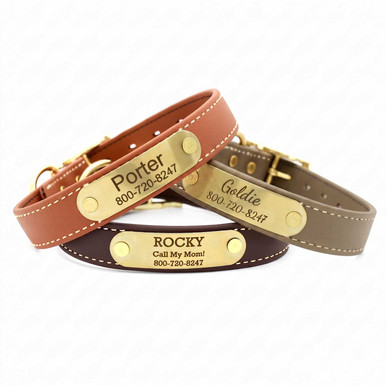
dogIDs uses 304 stainless steel or solid brass for our metal dog tags and nameplates. These are material choices; the engraving, attachment method and available space also matter when selecting identification.
Browse our dog ID tags and nameplates to compare options. For identification without hanging-tag noise, see our guide to silent dog ID tags.
Care for the Complete Waterproof Collar
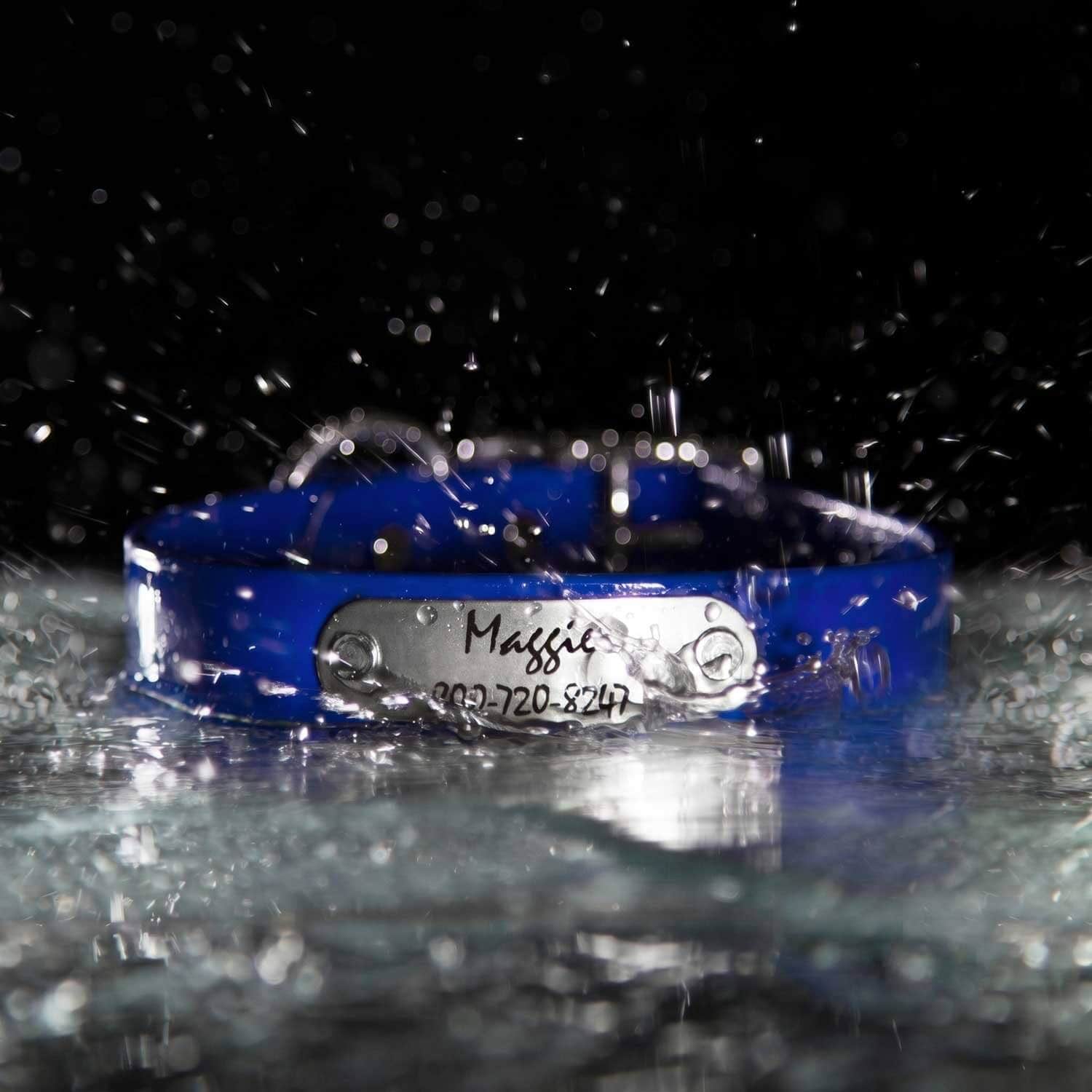
A waterproof strap makes cleanup easier, but the hardware still benefits from attention.
- Follow the individual product’s cleaning instructions.
- For dogIDs waterproof collars, use warm water and mild soap, then rinse thoroughly.
- Rinse away salt, pool-water residue, sand and mud after outings.
- Dry the collar and check around joints, rivets and the buckle.
- Inspect for cracks, bending, loose fasteners, sharp edges or a buckle that no longer operates properly.
- Replace damaged equipment rather than continuing to rely on it.
If you want to polish brass, check which cleaners are appropriate for the complete product. Avoid assuming that a cleaner suitable for bare metal is also suitable for the strap, coatings or engraving.
Questions to Ask Before Buying
- What is the strap made from?
- What are the buckle and D-ring made from?
- How is the D-ring constructed and attached?
- Are the rivets solid metal or plated, and what is underneath the plating?
- Does the product description identify the stainless steel grade?
- What care is recommended after saltwater or pool exposure?
- Are the listed materials currently available for the configuration you want?
These questions are more useful than judging a collar by its color or shine. Explore our waterproof dog collars and check the individual specifications to find the combination that suits your dog.
Waterproof Collar Hardware FAQs
Why Does Some Brass-Colored Hardware Turn Silver After Purchase?
One possible reason is that the component has a brass-colored finish over a different metal. As that finish wears, the underlying material becomes visible. If the base is steel, exposed areas can also rust.
Solid brass can darken or tarnish, but it does not have a separate silver-colored steel core. Check the material specification rather than relying on color alone. Wear rates vary, so a fixed timeline does not apply to every component.
Is Brass-Plated Dog Collar Hardware Antimicrobial?
You should not assume antimicrobial performance from a brass-colored finish or a “brass-plated” label. Performance claims require evidence for the specific material and surface; they cannot be inferred from appearance alone.
Likewise, solid brass collar hardware should not be treated as a proven way to prevent skin problems or keep a collar free of bacteria. Regular cleaning remains necessary regardless of the hardware material.
Will Stainless Steel and Solid Brass Hardware Hold Up in Saltwater Regions?
Both can be useful choices for wet conditions, but neither is immune to every form of corrosion or surface change. Stainless steel can experience localized corrosion in chloride-containing environments, while brass can tarnish and corrode under some conditions.
Saltwater, coastal deposits and pool water make rinsing and inspection particularly important. Follow the product’s care instructions, remove residue and dry the collar after use.
Can I Identify Stainless Steel With a Magnet?
A magnet can be a quick screening tool, but it cannot conclusively identify a metal or confirm its grade. Some genuine 304 stainless steel develops magnetic attraction after forming or cold working, while other nonmagnetic materials are not stainless steel at all.
Use the manufacturer’s material specifications rather than treating a magnet test as proof. The Australian Stainless Steel Development Association explains these differences in its guide to magnetic effects in stainless steel.
Does Waterproof Mean Maintenance-Free?
No. A water-resistant or waterproof strap does not remove the need to clean and inspect the buckle, D-ring, rivets and identification. The condition of the complete assembly matters.
Personalized Waterproof ScruffTag Collar
$39.00
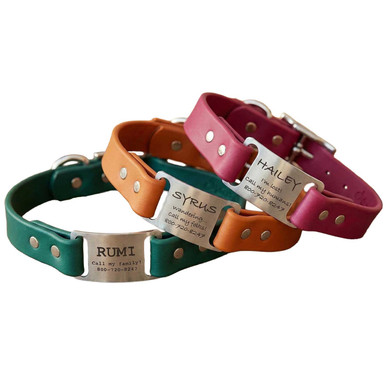
The Ultimate "Go-Anywhere" Silent ID Dog Collar Mud, lake water, salt water, pool water, rain, or snow—Our custom engraved Waterproof ScruffTag Personalized Dog Collar is built… read more
Personalized Waterproof Standard NamePlate Collar
$34.00
Waterproof Standard Collar with Personalized Name Plate Riveted On When choosing what kind of collar you want for your dog, material and construction are always… read more
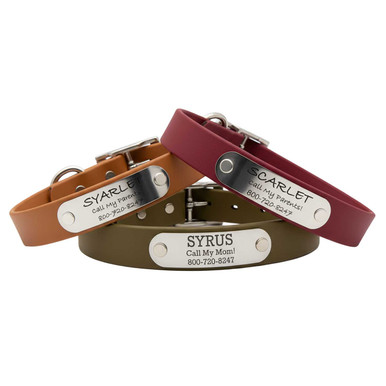
Personalized Waterproof ScruffTag Collar with Brass Hardware
$39.00
Custom Engraved Waterproof ScruffTag Collar with Brass Hardware These Waterproof ScruffTag Collars Personalized with Brass Hardware will have your pup looking his best this fall.… read more

Personalized Waterproof Standard NamePlate Collar with Brass Hardware
$34.00
Personalize Your Pup with an Odor-Proof Waterproof Name Plate Collar Our Waterproof NamePlate Collars will have your pup looking his best with these earthy colors.… read more
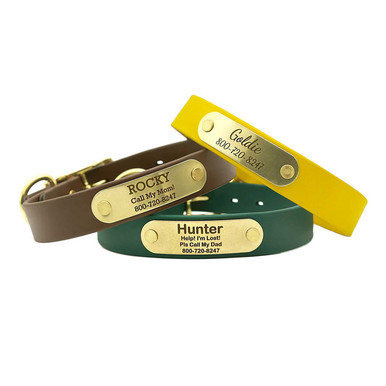
Personalized Waterproof Stitched Standard NamePlate Collar
$39.00
Personalized Waterproof Stitched Standard Dog Collar with Name Plate Our Waterproof Faux Leather NamePlate Collar looks and feels just like real leather, but without the… read more