
Types of Dog Collars: Styles, Materials & How to Choose
Table of Contents
- Dog Collar Types at a Glance
- Standard Flat Dog Collars
- Center-Ring or Safety Collars
- Martingale Collars
- Slip Collars
- Dog Collar Materials
- Choosing Collar Width and Hardware
- Personalized and Non-Personalized Collars
- What Does “Training Collar” Mean?
- How to Choose a Collar for Your Dog
- Frequently Asked Questions About Dog Collar Types
Choosing a dog collar is easier when you understand what the different names describe. A collar can be waterproof, extra-wide, personalized and built with a standard buckle—all at the same time.
Some names describe how a collar works. Others describe its material, width, identification or intended use. Start with your dog’s measurements and daily routine, then compare those features.
This guide explains the main types of dog collars and the practical differences to consider before choosing.
Dog Collar Types at a Glance
| Feature | Examples | What to Compare |
|---|---|---|
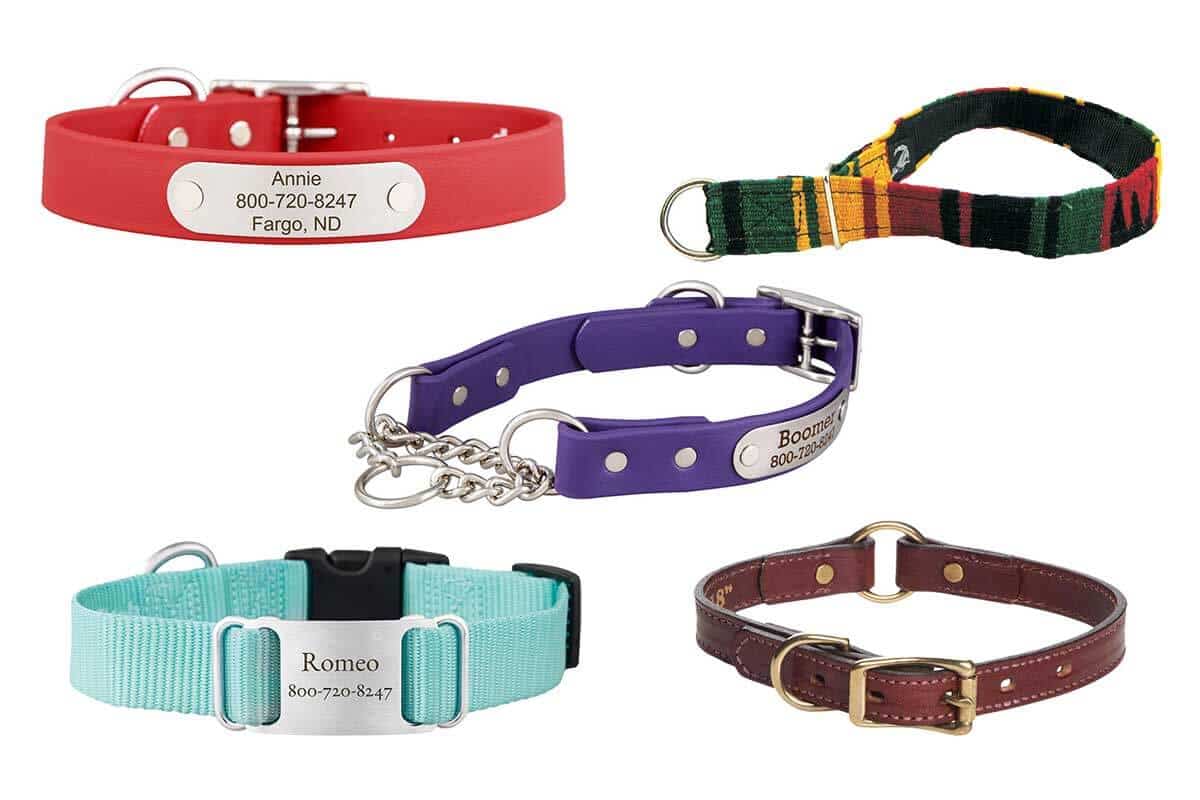
| Construction | Standard flat, center-ring, martingale, slip | Closure, leash attachment and whether the collar tightens |
| Material | Nylon, leather, waterproof coated webbing | Feel, flexibility, cleaning and care |
| Width and hardware | Narrow, standard-width, extra-wide | Neck proportions, collar weight and freedom of movement |
| Identification | Embroidery, engraved buckle, attached nameplate, separate tag | Readability, attachment and current contact information |
| Integrated identification | ScruffTag Collars | A nameplate built into the collar’s structure; compare plate size, position and readability |
| Intended use | Identification, supervised walks, training, field activities | The specific product’s instructions and your dog’s needs |
Standard Flat Dog Collars
A standard flat collar has a strap that closes around the neck without a sliding tightening mechanism. Common closures include belt-style buckles and side-release buckles.
A belt-style buckle uses a prong and adjustment holes. A side-release design typically uses a slider to adjust the strap. Check the actual product: adjustment range, hardware and attachment points vary.

Flat collars are a familiar option for identification and supervised walks when the fit and neck attachment suit the dog. Follow the manufacturer’s instructions for leash attachment and check the buckle, stitching and hardware regularly.
Center-Ring or Safety Collars
Center-ring collars have a ring incorporated into the main strap, usually opposite the buckle. They are often called safety collars and are familiar in hunting and field gear.

The center ring provides a point where the strap can pivot to relieve some of the collar strap tension when caught on an obstacle and also helps the dog possibly wiggle out of the collar. The center ring also acts as a convenient point to attach a leash. However, a center-ring collar is not the same as a purpose-designed breakaway collar. The name “safety collar” does not guarantee that it will release if caught on an obstacle.
Check the product’s designated leash attachment point and instructions. Do not rely on the center ring to make unattended wear or snag-prone activities safe.
Martingale Collars
A martingale has a main neck strap and a smaller loop or chain that draws the strap’s ends together under leash tension. The construction limits how far the mechanism can travel.
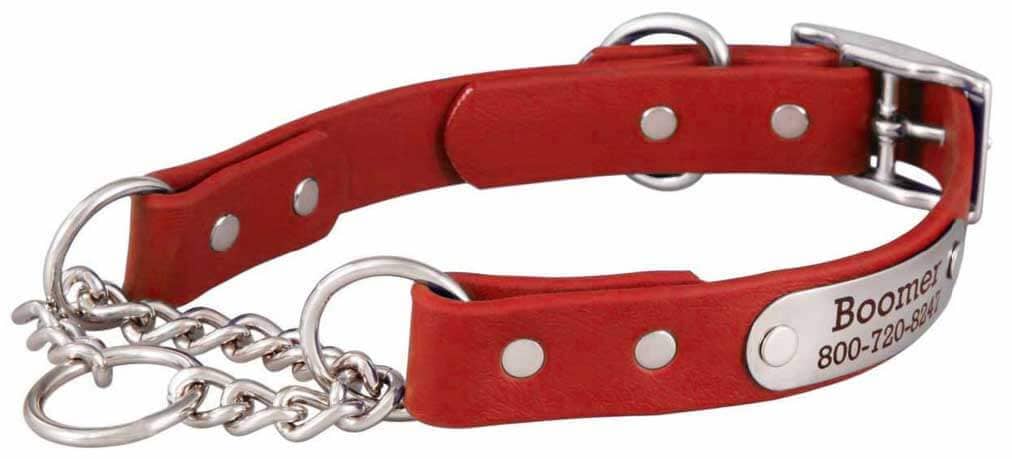
A properly fitted martingale can help reduce backing out of a collar. It is especially familiar for dogs whose heads are narrow relative to their necks, but individual fit matters more than breed alone.
The tightening limit does not eliminate neck pressure. Check the fit in both the relaxed and tightened positions, avoid leash jerks and sustained tension, and remove the collar when the dog is unattended or crated.
For construction, fitting and material comparisons, read Martingale Collars: How They Work, Fit & Which to Choose.
Slip Collars
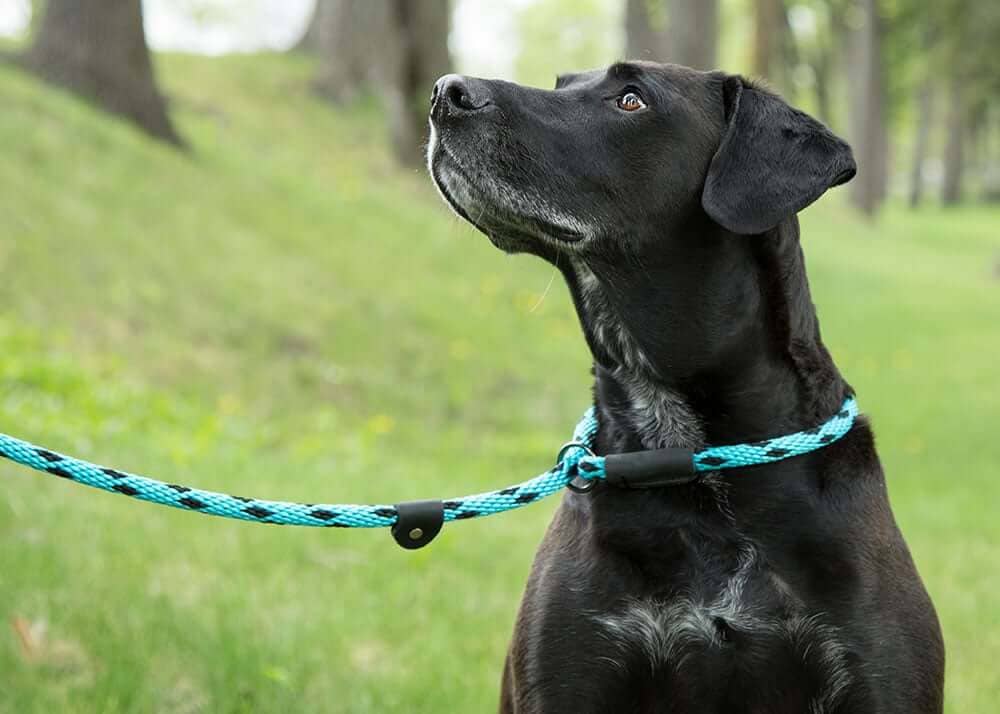
A traditional slip collar tightens as tension draws the strap, rope or chain through a ring. Unlike a martingale, it may not have a built-in limit on tightening.
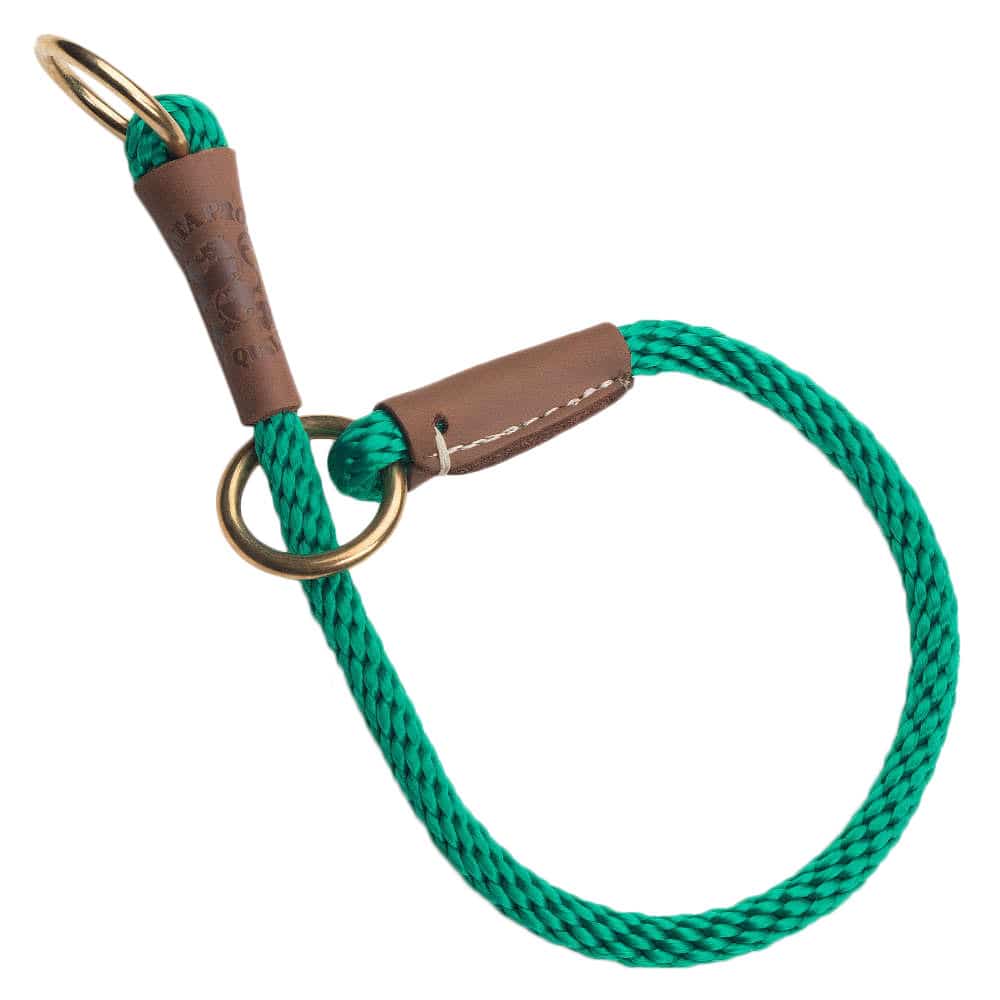
A small dog is not automatically protected from excessive pressure because of their size. Understand the specific design and fitting instructions before use. Slip collars should not be left on an unattended dog.
If you are unsure whether a tightening collar is appropriate, ask a qualified reward-based trainer to help assess your dog and equipment.
Dog Collar Materials
Nylon Webbing
Nylon collars come in many colors, patterns and constructions. Compare the strap’s thickness and flexibility, stitching, buckle and adjustment range. Follow the care instructions and let a wet collar dry before extended wear.
Explore nylon dog collars for current options.
Leather
Leather collars offer a different feel and appearance from webbing. Their flexibility and care requirements depend on the leather and construction. Follow the maker’s cleaning and conditioning instructions, particularly after exposure to water.
Compare leather dog collars by their measurements, hardware and intended use.
Waterproof Coated Webbing
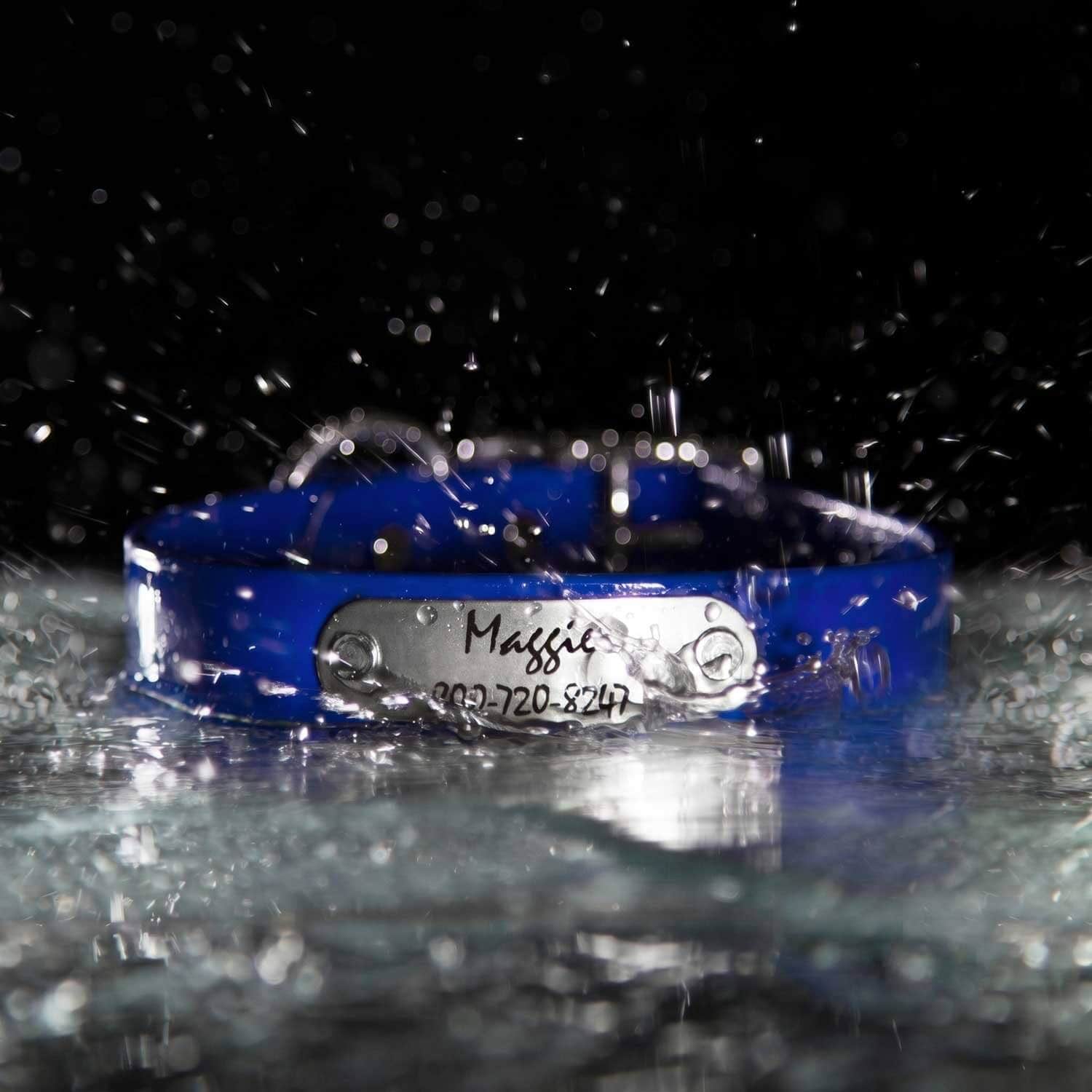
Waterproof collars use coated strap materials that are practical for wet or muddy routines. At dogIDs, our waterproof range includes BioThane options.
Waterproof describes the strap material; it does not mean every component is maintenance-free. Clean away dirt, check hardware and identification, and follow the product’s care instructions.
Browse waterproof dog collars to compare styles and personalization.
Choosing Collar Width and Hardware
Width is a separate choice from material or mechanism. A wider collar may suit a longer neck, while a narrower, lighter design may fit another dog more comfortably.

Check whether the collar allows comfortable head and neck movement. Consider the weight and size of the buckle and rings as well as the strap. Width alone does not establish strength, prevent injury or solve pulling.
Personalized and Non-Personalized Collars
Personalization adds identification to a collar through embroidery, an engraved buckle, an attached nameplate or a plate integrated into the collar’s structure. These options can be combined with different materials and collar designs.
Choose readable contact information and check it regularly. A current phone number gives someone who finds your dog a way to reach you.
Compare personalized dog collars or explore non-personalized dog collars if you prefer to add separate identification.
ScruffTag Collars: Identification Built Into the Collar
A ScruffTag Collar incorporates the identification plate into the collar’s structure rather than hanging a tag from a ring or attaching a nameplate to the outside of a continuous strap.
The plate connects the collar’s strap sections and is designed to position readable identification at the scruff of the neck. That construction is what distinguishes a ScruffTag Collar from other personalized collar styles.

Compare the plate size and available engraving space alongside the collar’s width, material and measurements. Choose clear, readable contact information and check that your phone number stays current.
Explore ScruffTag Collars to compare the available designs.
What Does “Training Collar” Mean?
“Training collar” describes an intended use rather than one construction. Someone may use a standard flat collar or martingale during training; others use the term specifically for electronic equipment.
Electronic collars vary in their functions, which may include tone, vibration or stimulation. Tone and vibration still need to be introduced thoughtfully; they are not automatically comfortable or meaningful to every dog.
Whatever equipment you choose, it does not replace teaching. Build skills with clear cues, rewards and manageable distractions. Persistent pulling, lunging or fear deserves an individual training plan.
How to Choose a Collar for Your Dog
- Start with the activity. Identification, supervised walks and field activities may call for different features.
- Measure for the specific product. Follow its size chart and measuring method rather than choosing by breed or your dog’s old collar label.
- Check the mechanism. Understand how the buckle, adjustment and any tightening loop work.
- Match the material to your routine. Consider water, mud, cleaning and care.
- Compare width and hardware weight. Watch your dog move and check for rubbing or interference.
- Add readable identification. Keep contact details current and inspect them for wear.
Use the dogIDs sizing guides alongside the instructions for your selected collar. Recheck fit as your dog grows or their weight and coat change.
If neck attachment causes discomfort or your dog has a relevant medical condition, ask your veterinarian about suitable walking equipment. A harness may be appropriate for some dogs and activities.
Frequently Asked Questions About Dog Collar Types
Can a collar be waterproof and personalized?
Yes. Material and identification are separate features. A waterproof collar may have a nameplate, engraved buckle or another identification option, depending on its design.
How is a ScruffTag Collar different from an attached nameplate collar?
A ScruffTag Collar uses an identification plate built into the collar’s structure, connecting the strap sections. An attached nameplate is fastened to the outside of a continuous collar strap. Compare fit, plate size and readability when choosing between them.
Is a martingale the same as a slip collar?
No. A martingale has a limited-slip mechanism. A traditional slip collar may continue tightening without the same built-in travel limit. Both require appropriate fit and handling.
Does an extra-wide collar stop pulling?
No. Collar width does not teach loose-leash walking. Choose a comfortable fit and address pulling through training and an appropriate equipment assessment.
Does one collar work for every activity?
Not necessarily. Your dog may use different equipment for identification, supervised walks and other activities. Follow each product’s intended use and remove equipment where it could catch or become tangled.